Buenos Aires Provincial Police
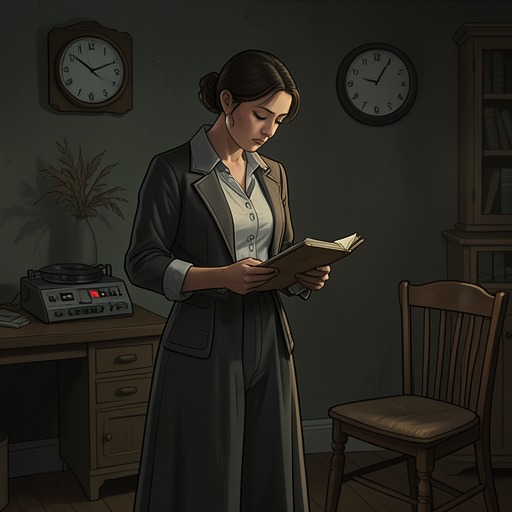
Elena KnowsThe Buenos Aires Provincial Police is the institution that classifies Rita’s death as suicide and closes the case. Its response to Elena’s continuing questions is not a renewed investigation but a recurring meeting with an officer assigned to listen to her. Through that arrangement, the novel distinguishes the appearance of official attention from the work of actually investigating a death.
Institutional Response
The police and the courts regard the case as settled: Rita’s death is officially a suicide, and the assigned officer is instructed to communicate that the case is closed. The instructions allow for psychological assistance to be offered to Elena if needed, but do not authorize further inquiry. The chief presents the meetings as an act of humanitarian concern rather than an obligation to investigate or provide a listener.
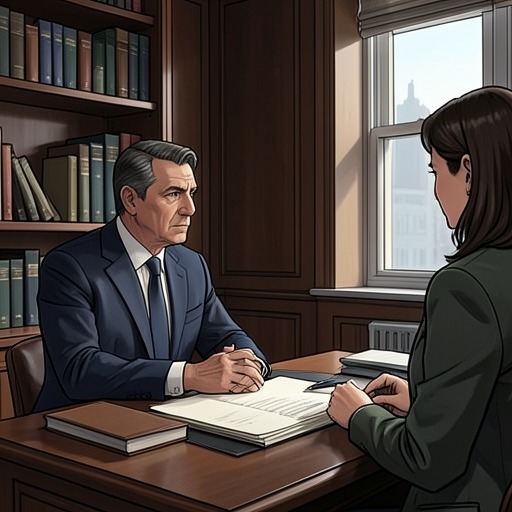
The officer sent to meet Elena is Benito Avellaneda, who is not an inspector, despite being permitted to present himself as one. His actual assignment is office duty, which includes routine administrative work such as recording complaints and checking addresses. He was placed there after a disciplinary incident at the Provincia Bank. The police use his apparent rank to lend Elena’s case an importance it does not have within the institution, while the underlying instruction remains that the case is closed.
Meetings with Elena
Avellaneda meets Elena on Mondays, Wednesdays, and Fridays. At ten o’clock she arrives at the station and waits for him. The regularity gives the visits a place in her week, but their routine does not amount to investigative progress. At first, Elena asks for leads and explanations and insists that Rita could not have planned her death: the rope and chair were already in the belfry, she argues, and someone must have arranged them. Avellaneda initially responds with little more than agreement and repeats the official conclusion.
The rain becomes a point of difference between them. Elena treats the fact that it was raining as evidence that the death was not a suicide; Avellaneda and the police consider the weather irrelevant. He eventually acknowledges that it rained without changing the institution’s position. During the meetings he reads Elena pages from the report, sometimes returning to pages they have already disputed. Elena recognizes from these encounters that there had been no meaningful investigation and that the report offers no leads capable of answering her questions.
Clues and the Limits of Inquiry
Once she understands the limits of the official response, Elena brings her own material to the station. She gives Avellaneda Rita’s diary, her address book, a handwritten list of people who knew her daughter, and a list of places Rita had visited shortly before her death. The list includes Roberto Almada’s house, the Sacred Heart Catholic School, a supermarket, Roberto’s mother’s hair salon, and the health insurance offices where Rita had sought reimbursement for Elena’s renal examination. It also includes Dr Benegas’s office.
Avellaneda adds that Rita went to see Dr Benegas two days before her death, not for her own illness but to discuss Elena. Elena did not know about the visit and says she had no appointment. The disclosure gives her a concrete new fact about Rita’s efforts on her behalf, but it does not establish that the doctor was suspected or that the police pursued the lead. Avellaneda explicitly frames the information as part of assembling a list, not as the beginning of a reopened case.
Narrative Significance
The police station offers Elena a repeated encounter with authority but not the recognition she seeks. The officer’s assigned presence and the report’s pages create the form of an official inquiry; their content reveals its absence. Elena’s own lists and documents become more investigative than the institution’s account, while the police retain the power to define the case as closed. The Buenos Aires Provincial Police therefore shapes the search not by resolving Rita’s death, but by establishing the institutional boundary Elena must confront as she tries to understand it.